As part of our Student-Centered Learning blog series, this is the third installment of three in our mini-series, Stories from the Field: Student-Centered Learning. In this mini-series, we celebrate and highlight the successes of three different Michigan schools that are embracing student-centered learning.
These same schools are also featured in our recently published report, “Student-Centered Learning: In Principle and in Practice.” In this report, we share the principles of student-centered learning, the rationale behind the philosophy, and the stories behind some of the innovative approaches being utilized by districts not only across the country, but right here in Michigan.
In this article, superintendent of Fraser Public Schools, Ms. Carrie Wozniak, shares some of the exciting ways in which they give their students flexible learning options and make learning student-centered.
Innovate. Learn. Lead.
Prior to spending the last 2 years as the superintendent of Fraser Public Schools in Fraser, Michigan, Carrie Wozniak spent 7 years as their assistant superintendent of curriculum and instruction. So she understands the ins and outs of the journey this school district has been on towards a more student-centered approach to education.
Through a combined effort of staff, parents, and their Board of Education, Fraser is changing the traditional view of school to a new personalized, engaging, and customized learning environment for each student.
Fraser’s strategic plan for 2019-2023 centers on four main goals:
- Goal 1 Teaching Practices: Implementing deeper learning through the Universal Design for Learning framework
- Goal 2 Learning Partnerships: Building stronger relationships among our students, staff, and the community
- Goal 3 Learning Environment: Providing a climate and culture for learning where students are engaged and motivated
- Goal 4 Digital Ecosystem: Leveraging technology to accelerate and add value to learning
A centerpiece of their strategic plan is Fraser’s Portrait of a Graduate, which defines what their students need for success after high school. Their 6Cs of deeper learning competencies are:
- Critical Thinking
- Communication
- Creativity
- Character
- Collaboration
- Citizenship
At Fraser, students are given both voice and choice in their learning.
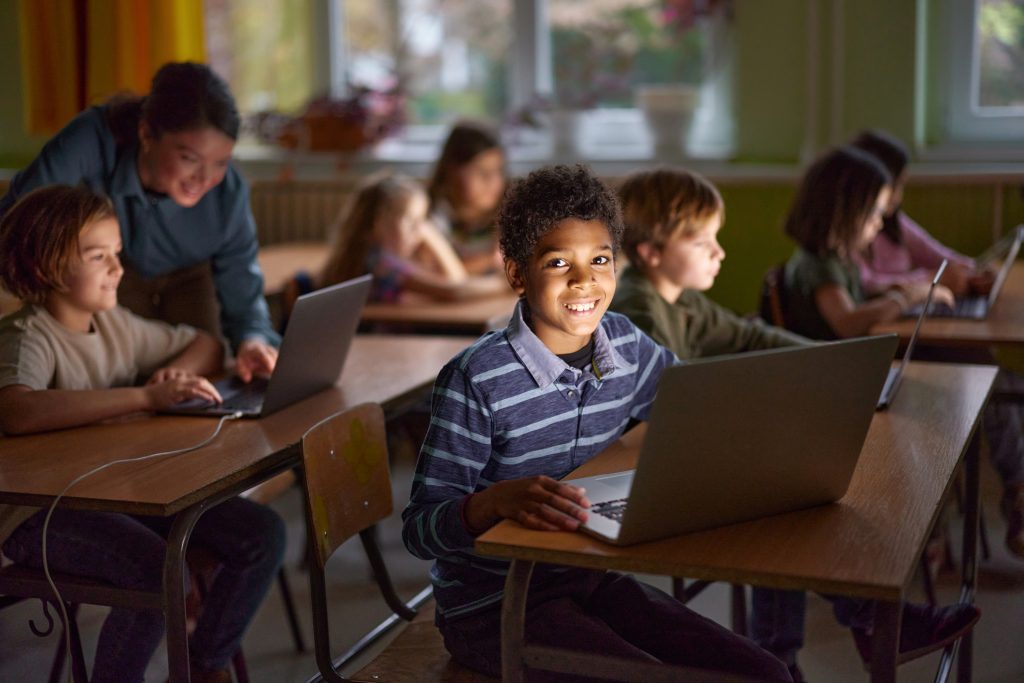
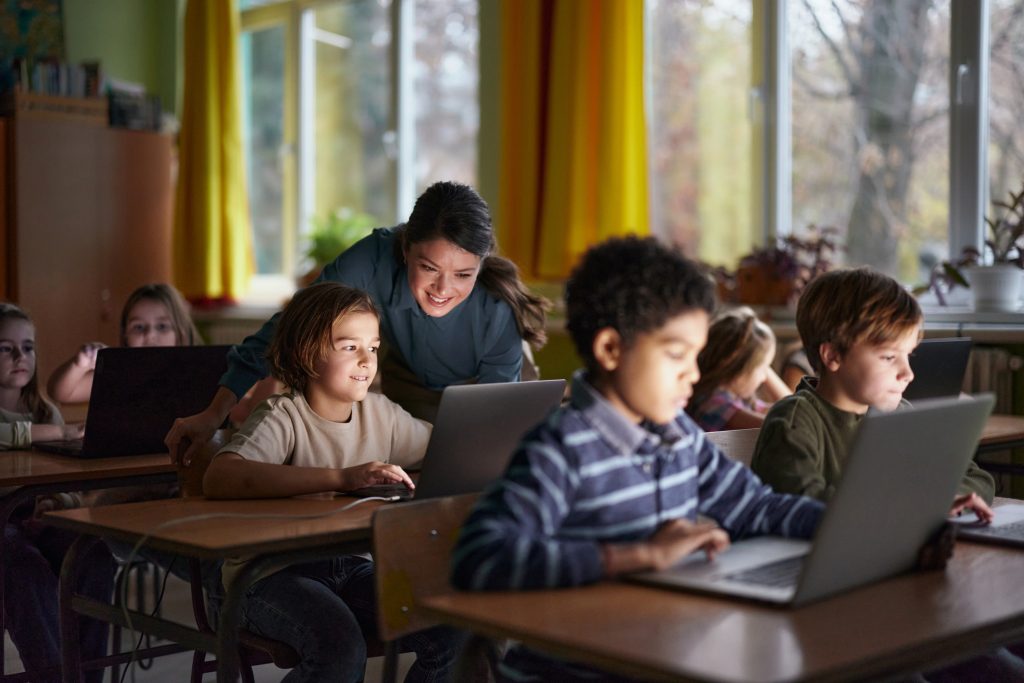
Students are 1:1 with technology. All high school students have a MacBook and all K-8 students have an iPad, which helps them access digital curriculum housed within an LMS. Blackboard is the LMS used for their secondary students, and itsLearning is used at the elementary level.
Through their strategic plan, Fraser is designing learning for all.
Competency-Based Learning & the Universal Design for Learning Framework
Fraser’s transition to a competency-based learning (CBL) environment began many years ago.
Their CBL model is based on using a Universal Design for Learning (UDL) framework. Every teacher at Fraser has gone through UDL training, which helped to improve their lesson design and helped them focus on meeting the needs of all of their students.
By using a competency-based approach in a UDL framework, students are given options to show what they know.
In addition to the UDL training, 11 of Fraser’s teachers have gone through training to become 21st-century literacy coaches. These teachers/coaches teach 50% of the time and spend the other 50% coaching at one of the schools throughout the district.
This coaching model has been used throughout Fraser Public Schools for over 7 years, and it really gives the district a sense of balance between top-down and bottom-up communication.
Wozniak feels that leadership must “connect the dots” for their schools in terms of their work from year to year. She feels that the district-wide coaching provided by trained members of their own staff is a part of this balance—helping teachers to see the bigger picture, the “why” behind their work.
Advice and Final Thoughts
For schools and districts that have not already adopted student-centered learning principles, Wozniak sees student engagement and satisfying the personalization needs of students and families as being compelling reasons for making such a shift.
She emphasized that schools must be purposeful in their design.
“These days, students are different. There is an expectation of choice from students and families. Everybody has choices in their lives outside of school, and they now expect that from education,” noted Wozniak.
She also believes that Fraser’s transition to remote learning caused by the COVID-19 pandemic was actually easier because they already employed a student-centered approach to learning and both students and teachers were used to utilizing technology and their LMS on a daily basis. Wozniak explained:
“We have a digital ecosystem. For us to shift to fully remote learning, we only had to shift slightly, modifying content somewhat as we already had the infrastructure and protocols in place to support remote learning. Our teachers already had their curricular resources in our LMS, so when we went fully remote, it wasn’t a lot of work, actually. Being student-centered already, we simply stayed focused on student learning instead of figuring out how to teach remotely. This allowed our teachers to focus more on learning, than emergency remote teaching. They didn’t need to entirely shift their focus.”
When learning is designed to be student-centered—competency-based, personalized, and flexible in terms of pace and place—learning is not limited to being teacher-led in a classroom.
Student-centered learning is collaborative, student-driven, and meaningful.
As you consider making a shift to a more student-centered learning model, how can you design learning opportunities which allow you to focus more on student-learning and less on teaching?
Can you design learning opportunities that allow for student voice and choice and can extend beyond the walls of your classroom?
Your students are ready. Are you?
Student-Centered Learning Blog Series
In our Student-Centered Learning blog series, we lead a discussion each month about student-centered learning: what it is, how it can help students and schools, and how to make it a reality. Our hope with this series is to provide practical insights to school leaders, teachers, and parents on how to make education more meaningful to students. Stay up to date on future blogs in this series by signing up for email notifications!
About the Authors
Christa Green
Christa received her master’s in Curriculum and Instruction from Kent State University, as well as a bachelor’s degree in Business Administration. She taught middle school language arts and social studies for seven years before coming to work for Michigan Virtual in 2018. As a research specialist with the Michigan Virtual Learning Research Institute, Christa enjoys using her passion for education, curriculum, research, and writing to share and shape best practices in online and blended learning with other educators within and beyond Michigan.
Christopher Harrington
Dr. Christopher Harrington has served public education as a teacher, an administrator, a researcher, and a consultant for more than 25 years and has experience assisting dozens of school districts across the nation in the design and implementation of blended, online, and personalized learning programs. He has worked on local, regional, and national committees with the Aurora Institute (formerly iNACOL) and various other education-based organizations aimed at transforming education through the use of technology.